When we think of Western art, we often think of “adding” adding more paint, more details, more volume, more realistic perspective. We think of the grand, crowded ceiling of the Sistine Chapel.
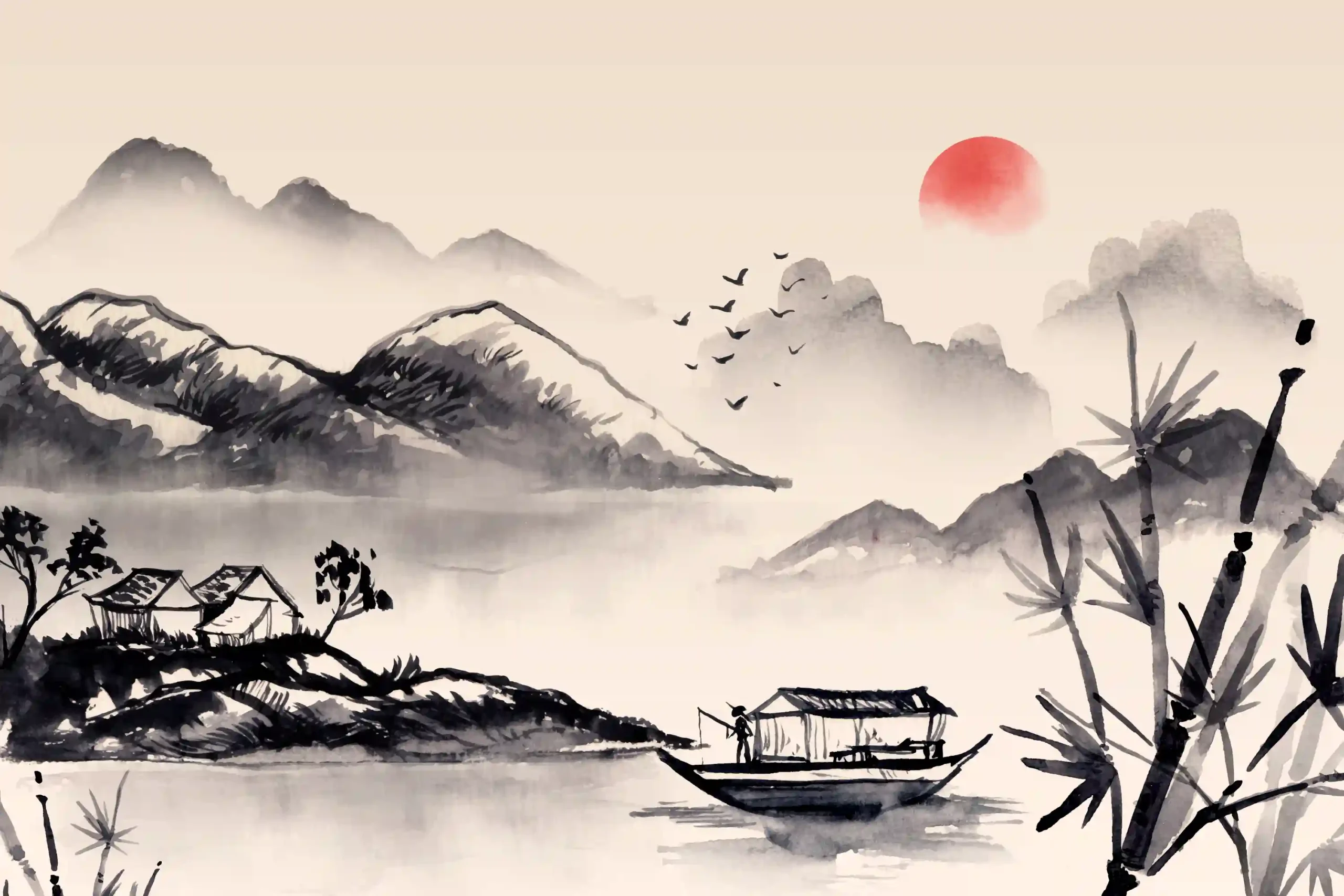
But when we turn our eyes to the East, specifically to Japan, we encounter a different philosophy. Japanese art is often about “subtracting.” It is about the elegance of a single brushstroke, the power of empty space, and the deep, spiritual connection with nature.
Welcome to the World of Art blog series on ArtVibe. Today, we are traveling to the Land of the Rising Sun. Whether you are a fan of anime, a lover of minimal design, or just a student looking for a moment of Zen, Japanese art has something profound to teach you.
The Soul of Nature
Historically, Japan was isolated from the rest of the world for centuries (a period known as Sakoku). This isolation allowed a completely unique artistic language to develop, untainted by outside influences.
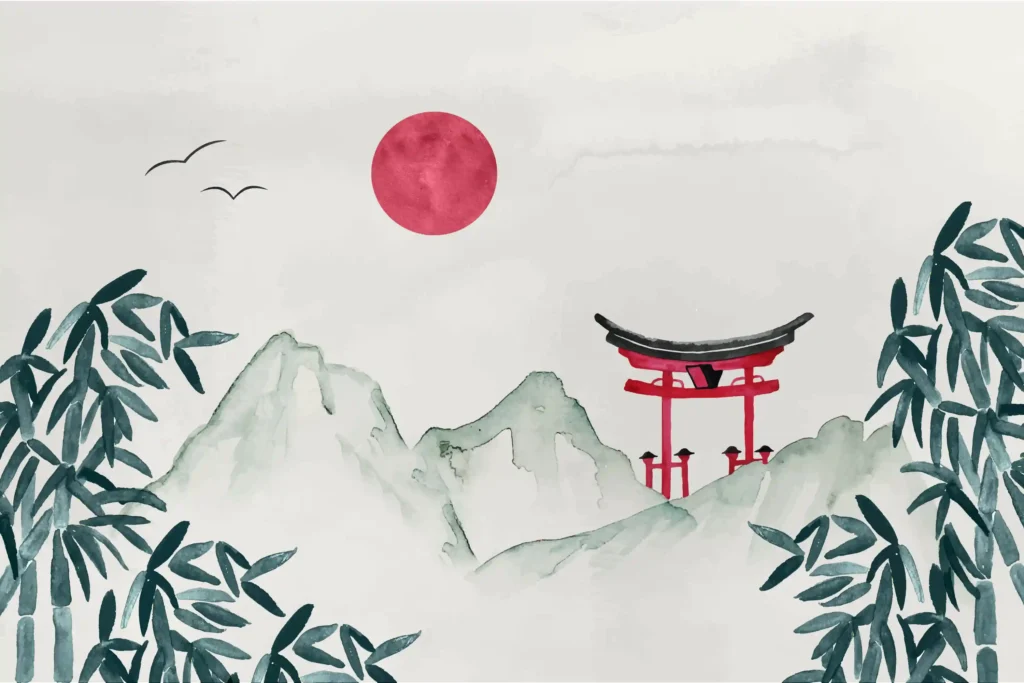
At the core of this language is Nature. In the West, art often tries to dominate nature or capture it perfectly. In Japan, art tries to be nature. You will rarely see a Japanese painting that is purely abstract; there is almost always a reference to the changing seasons, a bird, a branch of cherry blossoms (Sakura), or a mountain.
But it’s not just about drawing pretty trees. It’s about the philosophy behind them.
Wabi-Sabi: The Art of Imperfection
This is perhaps the most beautiful concept in Japanese aesthetics. Wabi-sabi is the appreciation of things that are imperfect, impermanent, and incomplete.
- A cracked tea cup repaired with gold lacquer (Kintsugi) is considered more beautiful than a perfect new cup because it has a history.
- A fading autumn leaf is more poignant than a blooming flower.
In a world obsessed with Photoshop perfection and Instagram filters, Wabi-sabi reminds us that reality is flawed, and that is where its beauty lies.
Ma: The Power of Emptiness
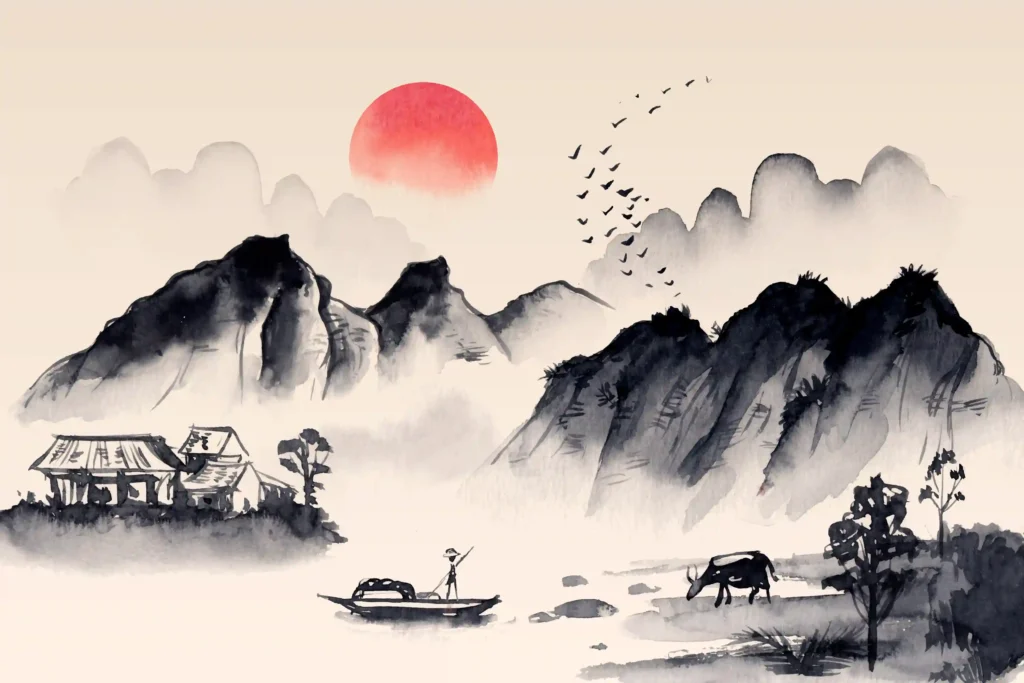
Do you remember when we discussed Space (Negative Space) on our homepage? Japanese art masters this concept, which they call Ma (間). Ma is not just “empty space”; it is a pause. It is the silence between musical notes that gives the music rhythm. In a painting, the empty white paper is just as important as the black ink. It gives the viewer’s eye room to breathe and the imagination room to wander.
Edu-Zone: Zen Discipline & Deep Work
Let’s take a lesson from the Japanese masters and apply it to your university life.
Japanese arts whether it’s Archery (Kyudo), Tea Ceremony (Sado), or Calligraphy (Shodo) are built on the foundation of Zen mindfulness. It is about being 100% present in the moment.
When a master calligrapher writes a character, they don’t think about what they will eat for dinner. They don’t check their phone. They clear their mind and channel all their energy into one motion.
How to Apply This to Studying: Students today suffer from a “distraction epidemic.” We try to write an essay while watching Netflix, texting friends, and eating a snack. The result? Shallow work and stress.
Try the “Zen Study Method” (Deep Work):
- Ritualize your space: Just as a tea ceremony has a specific setup, clean your desk. Remove clutter. A clear space creates a clear mind.
- Single-tasking: Do one thing. Only one thing. If you are reading a textbook, just read. Don’t highlight, don’t summarize yet. Just be with the text.
- Accept the boredom: In Zen, boredom is just a feeling. When you feel the urge to check social media, acknowledge it, and let it pass like a cloud. Return to your work.
By treating your homework with the same respect and focus as a Japanese master treats their craft, you will find that you finish faster and understand deeper. Discipline is not a punishment; it is a path to freedom.
Ukiyo-e: Pictures of the Floating World
If you have seen one piece of Japanese art, it is probably The Great Wave off Kanagawa by Hokusai. This belongs to a genre called Ukiyo-e (Woodblock Prints).
Flourishing during the Edo period (17th–19th centuries), Ukiyo-e literally means “Pictures of the Floating World.” It referred to the fleeting pleasures of life the theater, beautiful geishas, travel, and nature.
Why it was revolutionary:
- Mass Production: Unlike unique oil paintings in Europe reserved for the rich, woodblock prints could be mass-produced. They were the “pop art” of their time, affordable for common people.
- Bold Design: Because they were carved into wood, the lines had to be clear and bold. Colors were flat and bright. There were no subtle shadows (chiaroscuro) like in European art.
The Impressionist Connection: Did you know that Vincent van Gogh was obsessed with Japanese art? When Japan opened its borders in the 1850s, Ukiyo-e prints flooded Europe. Artists like Monet, Degas, and Van Gogh were shocked. They loved the flat colors and the unusual compositions (often cropping subjects at the edge of the frame). This trend was called Japonisme, and it forever changed Western art history.
Shodo: The Way of Writing
In the West, we separate writing (text) and drawing (image). In Japan, they are the same. Shodo (Calligraphy) is one of the highest forms of art. Using a brush (fude) and ink (sumi), the artist writes Kanji characters.
But it is not just about legibility. It is about emotion.
- A character written with thick, heavy strokes might express strength or anger.
- A character written with thin, swift strokes might express joy or wind.
The brush captures the energy (Ki) of the artist. Once the ink touches the rice paper, it cannot be erased or corrected. It is a one-time performance. This teaches the artist to be decisive and confident another great lesson for life.
From Scrolls to Anime: The Modern Legacy
You might think ancient scrolls have nothing to do with Naruto or Studio Ghibli, but the lineage is direct.
The Choju-giga (Scrolls of Frolicking Animals) from the 12th century are often called the “first manga.” They depict rabbits and frogs acting like humans, drawn in a linear style that reads from right to left just like modern manga.
Japanese art has always valued the “line” over the “volume.” This preference for strong outlines and flat colors evolved seamlessly into the anime aesthetics we see today. So, when you watch an anime movie and admire the stunning background art or the emotional expression of a character, you are enjoying the evolution of a thousand-year-old tradition.
Conclusion: Finding Your Balance
Japanese art teaches us to slow down. It asks us to look at the empty space as much as the filled space. It invites us to find beauty in the old, the worn, and the simple.
For the student rushing between classes, or the artist overwhelmed by complex theories, Japan offers a simple answer: Breathe. Focus on one line. Appreciate the moment.
As we leave the serene temples of Japan, our journey through the World of Art takes a dramatic turn. We are heading West, back in time, to an era of knights, cathedrals, and religious devotion.
Comments are closed